Municipal Workforce Development Case Study: Building an Internal CDL Talent Pipeline
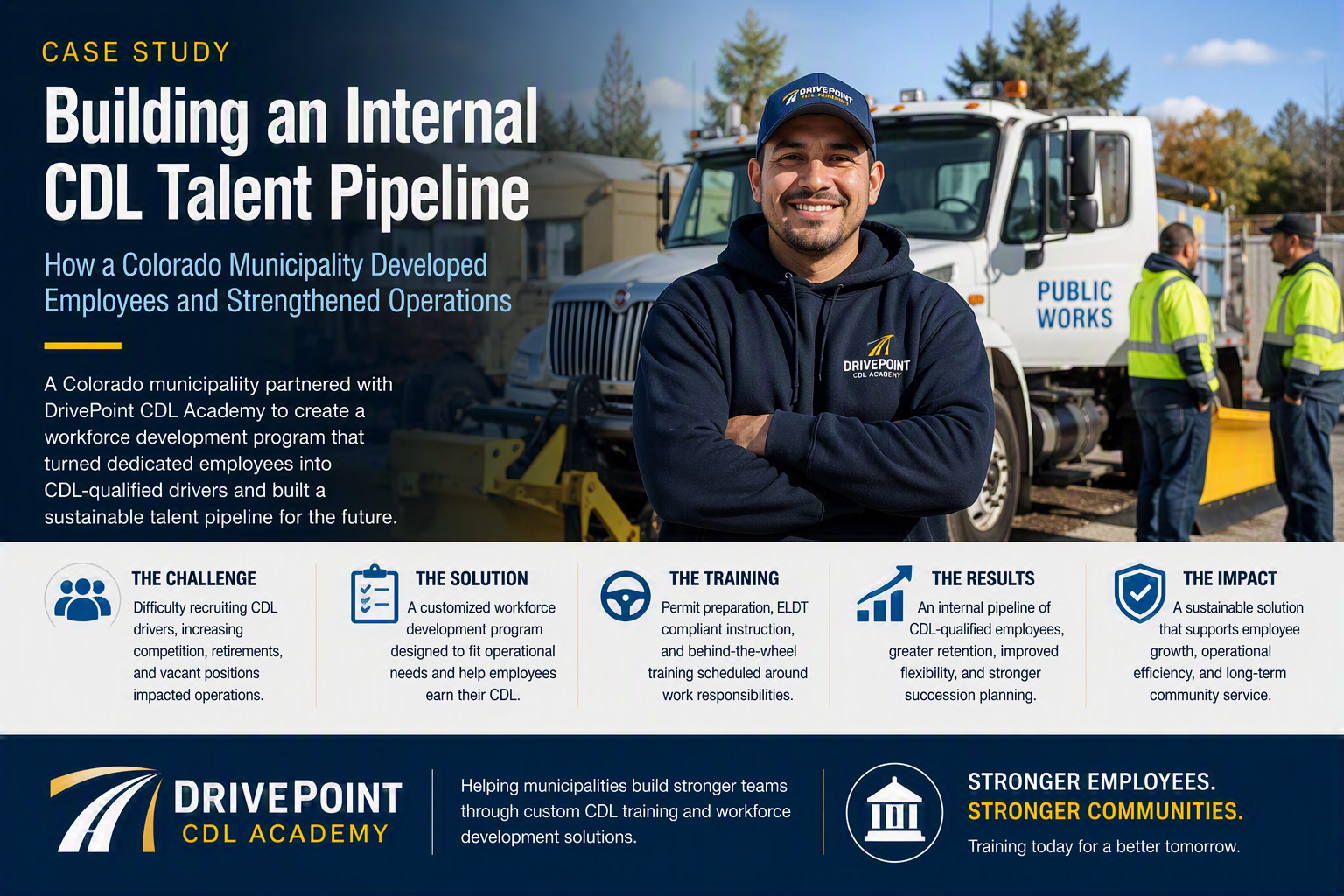
For many municipalities, finding and retaining qualified CDL drivers has become increasingly difficult. Public works departments, utilities, street maintenance divisions, and fleet operations teams all depend on employees who can safely operate commercial vehicles, yet competition for experienced drivers continues to grow. As private industry wages rise and the pool of qualified candidates becomes more limited, many local governments are discovering that recruiting experienced CDL holders from outside the organization is no longer a sustainable long-term strategy.
One Colorado municipality faced this exact challenge. Several positions throughout the organization required employees to hold a Commercial Driver's License, and vacancies were becoming increasingly difficult to fill. The municipality had dedicated employees who understood the community, cared about their work, and had proven themselves in their current roles, but many did not possess the CDL credentials necessary to advance into key operational positions.
Municipal leadership recognized that continuing to compete for a shrinking labor pool would only provide temporary relief. Instead, they began exploring a different approach. Rather than searching for qualified CDL drivers outside the organization, they wanted to create opportunities for existing employees to develop the skills and credentials needed to move into CDL-required positions.
The municipality partnered with DrivePoint CDL Academy to develop a workforce development solution focused on building an internal pipeline of qualified commercial drivers. The goal was not simply to train employees to pass an exam. The goal was to create a practical pathway that allowed employees to gain valuable new skills, advance their careers, and support the municipality's long-term workforce needs.
The process began with understanding the organization's operational requirements and identifying positions that required CDL credentials. Municipal departments often have unique scheduling needs, seasonal demands, and staffing constraints, which means training programs must be designed with flexibility in mind. Rather than applying a one-size-fits-all solution, DrivePoint worked alongside leadership to understand their workforce goals and develop a training plan that aligned with ongoing operations.
Employees selected for the program first received guidance through the initial stages of the CDL licensing process, including obtaining a DOT medical certification and preparing for the Commercial Learner's Permit examination. For many participants, this was the first time they had considered pursuing a CDL, so having a structured process and support system was critical to building confidence and maintaining momentum.
Once permit requirements were completed, employees began both classroom and behind-the-wheel training designed to prepare them for real-world vehicle operation. Training emphasized not only compliance with federal and state requirements, but also the practical skills necessary to safely operate commercial vehicles in the environments municipal employees encounter every day. Whether supporting public works operations, snow removal efforts, utility services, or transportation logistics, the focus remained on developing competent, safety-conscious drivers who could contribute immediately upon earning their CDL.
Throughout the training process, maintaining normal operations remained a priority. Scheduling flexibility allowed employees to continue meeting their job responsibilities while progressing through training. This approach minimized disruption to departmental workflows and helped ensure the municipality could continue serving the community without significant staffing interruptions.
As employees advanced through the program, municipal leadership began to see benefits that extended well beyond filling open positions. Employees appreciated the opportunity to develop new skills and pursue career advancement within the organization. Departments gained greater staffing flexibility and improved succession planning capabilities. Leadership strengthened retention efforts by investing directly in employee growth rather than continually relying on external recruitment.
Perhaps most importantly, the municipality began building something many organizations struggle to create: a sustainable talent pipeline. Instead of reacting to vacancies as they occurred, leadership was proactively developing qualified employees who could move into essential operational roles as needs arose.
The experience reinforced an important lesson that applies to municipalities across Colorado and throughout the country. Workforce development is often one of the most effective solutions to workforce shortages. Many organizations already employ individuals with strong work ethics, organizational knowledge, and a commitment to public service. What they may lack are the credentials needed to advance into specialized positions. By investing in training and professional development, employers can unlock the potential that already exists within their workforce.
For municipalities facing ongoing challenges in recruiting commercial drivers, developing internal talent can provide a practical and cost-effective alternative to competing in an increasingly difficult labor market. Employees benefit from career growth opportunities, organizations strengthen retention, and communities benefit from a more stable and capable workforce.
At DrivePoint CDL Academy, this workforce development philosophy continues to guide the way we partner with public sector organizations, utility providers, fleet operators, and employers across Colorado. By helping organizations create opportunities for their existing workforce, we support not only CDL training and compliance but also long-term workforce readiness, employee advancement, and operational success.
The most successful workforce strategies are not always about finding more people. Sometimes they are about investing in the people already committed to your organization's mission. For municipalities looking toward the future, developing an internal CDL talent pipeline can be one of the most valuable investments they make.