Strengthening CDL Training: Why Recent Investments in Driver Education Matter
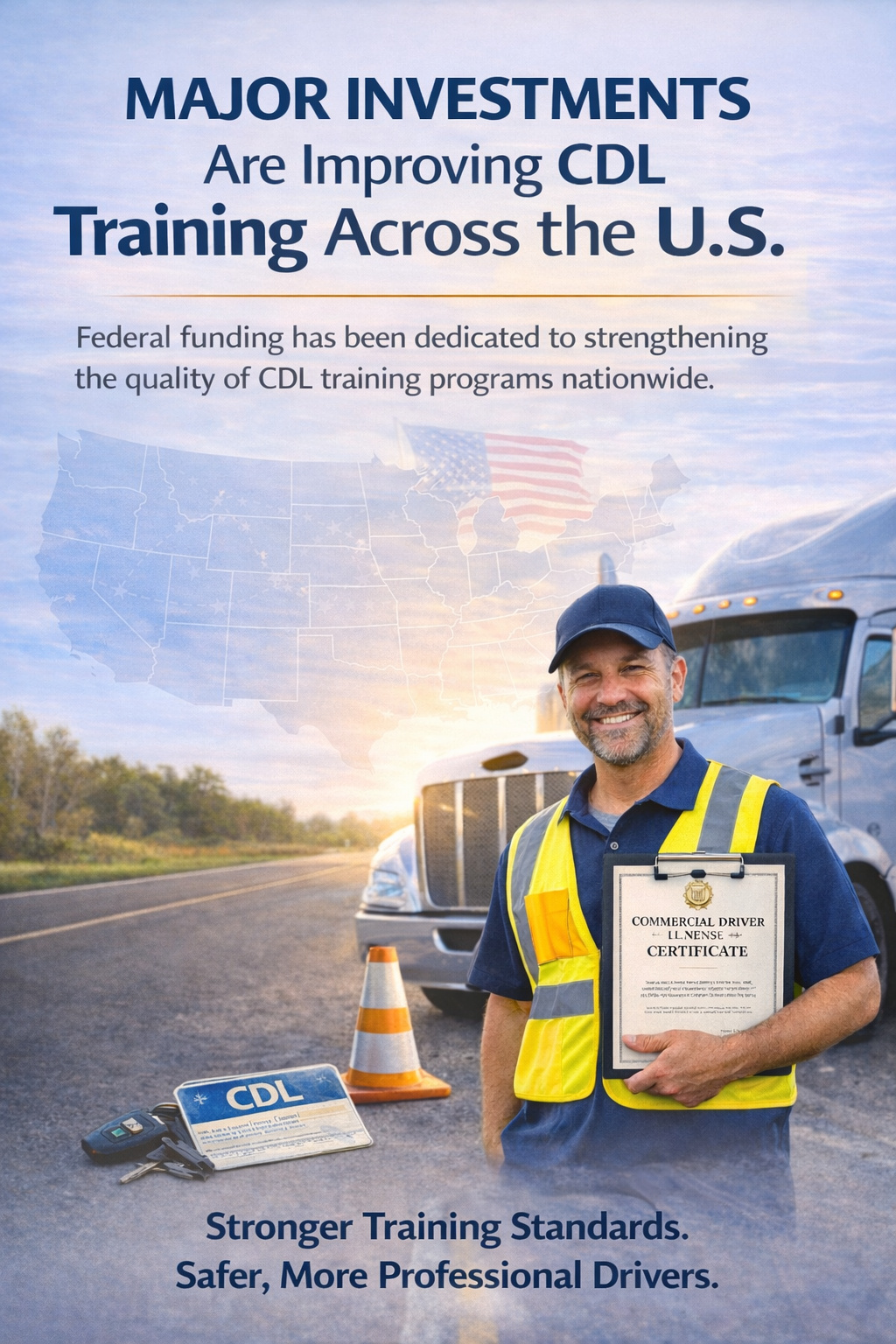
Across the country, the trucking industry is experiencing a renewed focus on the quality of driver training and the systems that support it. While much of the public conversation around trucking tends to highlight shortages, regulations, and negative incidents, a quieter and far more constructive effort has been taking place behind the scenes. Federal agencies, safety organizations, and industry leaders have been directing significant attention and funding toward improving the training and oversight of commercial drivers.
One of the most encouraging developments has been the allocation of substantial federal funding dedicated to strengthening CDL programs and improving the systems that support them. More than one hundred million dollars in grant funding has been directed toward initiatives designed to raise training standards, improve state enforcement capabilities, and help ensure that commercial drivers entering the industry are properly qualified. The goal of these investments is simple. When training is stronger, drivers are safer, fleets are more reliable, and the public benefits from a more professional transportation workforce.
Commercial driving is a profession that carries enormous responsibility. Every day, drivers operate large and complex vehicles in environments that demand skill, awareness, and sound decision making. Proper training is the foundation that prepares drivers for those realities. High quality CDL programs do far more than teach someone how to pass a test. They develop the habits, judgment, and safety mindset that professional drivers rely on throughout their careers.
For training schools and instructors who have long prioritized quality education, these new investments are a welcome sign. Many programs across the country have spent years advocating for stronger oversight and higher standards within the training environment. When schools operate with integrity and focus on producing safe drivers rather than rushing students through programs, it elevates the entire industry. Federal support for stronger CDL systems reinforces that commitment to professionalism.
Improved funding also allows state agencies to modernize their processes and strengthen the systems used to track driver qualifications and licensing. This helps prevent fraud, improves consistency across states, and ensures that drivers meet the requirements expected of them before operating commercial vehicles. In an industry that moves goods across thousands of miles and many jurisdictions, consistency and accountability are essential.
For new drivers considering a career in trucking, these developments create a more supportive path into the profession. Stronger training programs mean students are better prepared when they enter the workforce. They gain more confidence behind the wheel and a clearer understanding of the responsibility they carry as commercial drivers. Employers benefit as well, since well trained drivers are more likely to perform safely and remain successful in the industry.
These investments also send an important message about the future of trucking. Despite the challenges that often dominate the headlines, there is clear recognition at the national level that professional drivers play a vital role in the economy. Every shipment that reaches its destination safely represents the work of a skilled individual who has been properly trained to handle the demands of the road.
When training standards rise and support systems improve, the industry moves in the right direction. Safer drivers create safer highways, stronger fleets, and greater public confidence in commercial transportation. For those working in driver education and training, this renewed attention to quality represents meaningful progress and a positive step toward strengthening the profession for years to come.