What Can You Do With A Class B CDL?
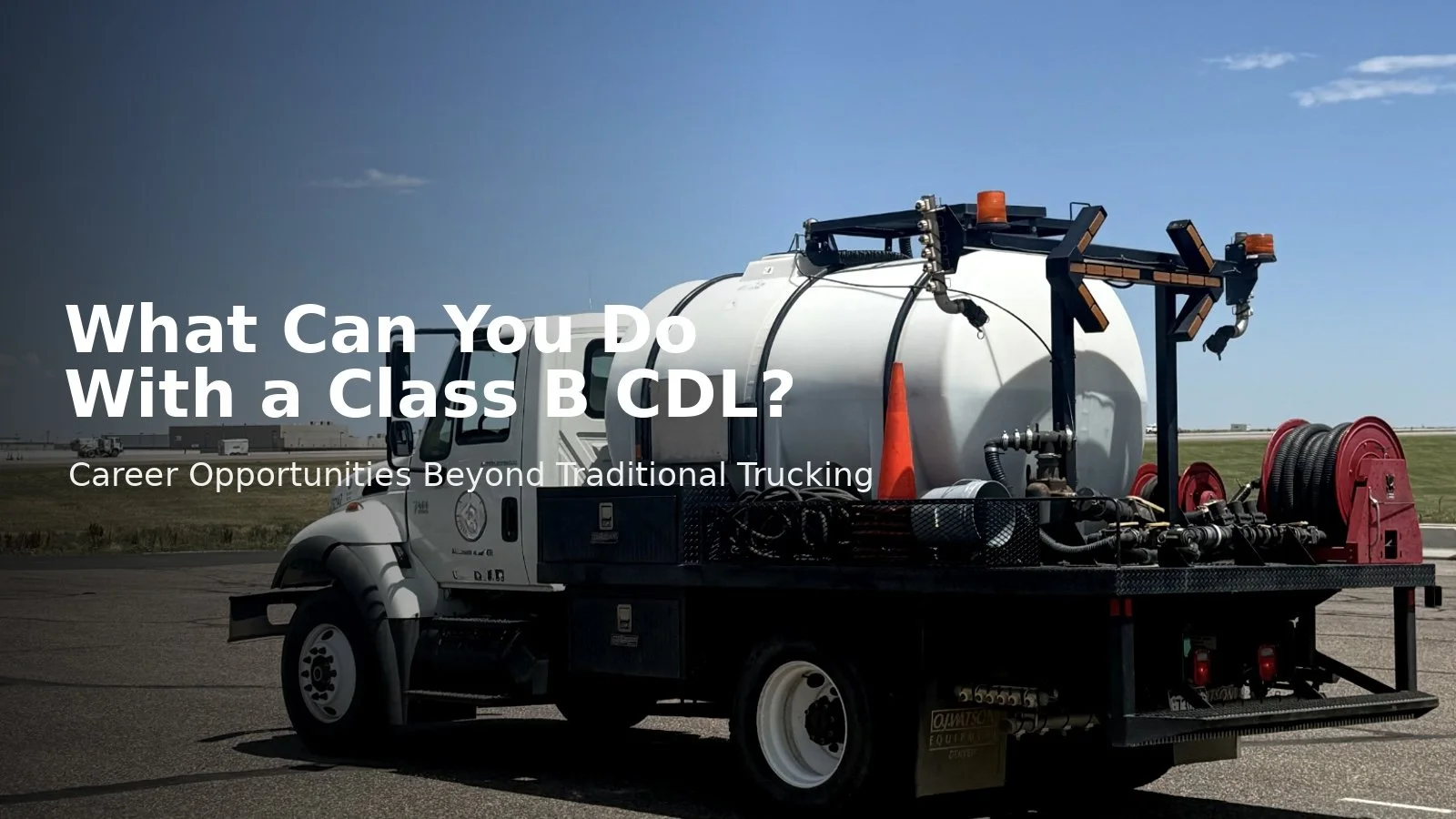
When many people think about earning a Commercial Driver's License, they immediately picture long-haul trucking and cross-country travel. While those opportunities certainly exist in the transportation industry, they are often associated with a Class A CDL. What many people don't realize is that a Class B CDL can open the door to a wide range of rewarding careers that allow individuals to stay closer to home while still enjoying stable employment, competitive pay, and opportunities for advancement.
For those exploring career options or considering a transition into a new field, a Class B CDL can be a valuable credential that provides access to industries that keep communities functioning every day. From public works departments and utility companies to construction firms and transportation providers, Class B drivers are responsible for operating many of the vehicles that support modern life.
A Class B CDL generally allows drivers to operate a single vehicle with a gross vehicle weight rating of 26,001 pounds or more. This includes a variety of commercial vehicles that are commonly used across multiple industries. While the specific job duties vary from employer to employer, the opportunities available to Class B drivers extend far beyond what many people initially expect.
One of the most common career paths for Class B CDL holders is working in public works or municipal operations. Cities and counties throughout Colorado rely on commercial drivers to operate snowplows, dump trucks, water trucks, street sweepers, and other specialized equipment. These positions often provide consistent schedules, strong benefits packages, and opportunities to serve local communities. For individuals seeking stable careers with local government agencies, a Class B CDL can serve as an important stepping stone.
Utility companies also employ a significant number of Class B drivers. Electric utilities, water districts, telecommunications providers, and natural gas companies often require employees to operate large service vehicles and equipment trucks. These positions combine driving responsibilities with hands-on technical work and can provide long-term career growth. As Colorado continues to invest in infrastructure and essential services, utility employers continue searching for qualified individuals who possess commercial driving skills.
The construction industry is another major employer of Class B CDL holders. Construction companies frequently utilize dump trucks, concrete mixers, water trucks, fuel trucks, and other heavy vehicles that require commercial licensing. With ongoing development projects throughout Colorado, skilled drivers remain in demand. Many professionals in the construction field appreciate the variety of work, the opportunity to work outdoors, and the ability to contribute to projects that shape communities.
Class B CDL holders may also find opportunities within the transportation sector itself. Bus drivers, shuttle operators, and certain passenger transportation positions often require a commercial license along with additional endorsements. These roles play an important part in helping people safely travel to work, school, medical appointments, and community destinations. For individuals who enjoy interacting with people and serving the public, passenger transportation can offer a rewarding career path.
Waste management and environmental services companies also depend heavily on Class B drivers. Garbage collection vehicles, recycling trucks, and specialized service vehicles require trained operators who can safely navigate residential neighborhoods, commercial districts, and industrial areas. These essential services help maintain clean and healthy communities while offering reliable career opportunities for commercial drivers.
Many warehouse, distribution, and delivery companies also employ Class B CDL drivers. As consumer demand for goods and services continues to grow, businesses require qualified drivers to transport products between warehouses, retail locations, job sites, and customers. These positions can provide steady employment and valuable experience within the logistics industry, often creating pathways to supervisory or management roles over time.
For individuals considering a career change, one of the most appealing aspects of a Class B CDL is its versatility. Rather than preparing for only a single type of job, a commercial license can create opportunities across multiple industries. This flexibility allows drivers to explore different career paths and find the environment that best matches their interests, goals, and preferred lifestyle.
Another advantage is the potential for career advancement. Many individuals begin with a Class B CDL and later choose to pursue additional endorsements, specialized certifications, or even a Class A CDL. As experience grows, doors may open to higher-level positions, specialized equipment operation, fleet management roles, safety positions, training opportunities, and supervisory careers.
At DrivePoint CDL Academy, we frequently speak with individuals who are surprised by the variety of opportunities available with a Class B CDL. Some are interested in working for local government agencies. Others are pursuing careers with utility providers, construction companies, transportation organizations, or private employers. What they all have in common is a desire for meaningful employment, professional growth, and the ability to build a better future.
The demand for skilled commercial drivers continues to extend beyond traditional trucking roles. Communities rely on Class B CDL holders every day to support essential services, maintain infrastructure, transport passengers, deliver products, and keep critical operations running smoothly. For individuals seeking a practical career path with long-term potential, earning a Class B CDL can be an investment in both professional development and future opportunity.
Whether you are exploring a new career, returning to the workforce, or looking to expand your qualifications, a Class B CDL can provide access to industries that offer stability, purpose, and room for growth. The opportunities are often closer to home than people realize, and the skills you develop can continue opening doors throughout your career.